
Drains and sewer lines
Sewer Line and Drain Cleaning Near Lake Houston, TX
Clear the stoppage, then find out why it happened with a camera before it happens again.
In short
- One slow drain is a fixture; all of them is the line
- Septic house: check the tank first
- Camera shows the pipe, the break and the roots
Fixture, Branch or Main
Plumbers sort a drain problem into three levels. A fixture clog is in one sink, tub or toilet and a small cable usually clears it. A branch clog is in the line that serves a bathroom or the kitchen. A main problem is in the pipe that carries everything out of the house, and it shows up as every drain slowing together, or sewage rising in the lowest fixture when water runs upstairs.
A house on septic adds a fourth possibility: the tank or the field is full, and no amount of cabling the house drain will change that. If you are on septic and the whole house is slow, read the signs page first.
What the Camera Is For
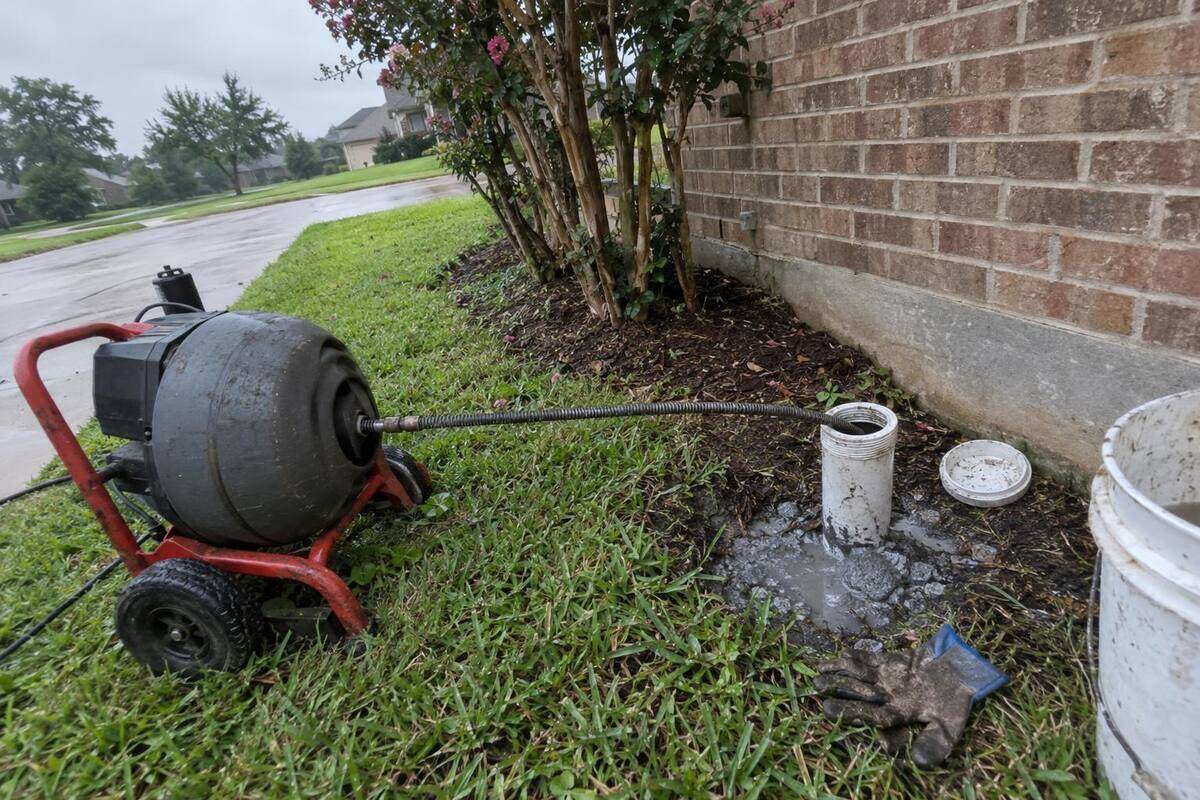
A cable clears the water; a camera shows why it stopped. It tells the plumber the material of the pipe, whether a joint has shifted, whether roots have found it, and whether a section holds water in a sag. That decides between a cleaning, a spot repair and something bigger, and it gives you a recording to compare quotes with.
As a general pattern, houses from the 1970s and 1980s, which is where most of Kingwood and a good share of Huffman sits, are the ones whose under-slab drain lines are oldest, and the camera is how you learn what was actually used.
Source: General plumbing practice; housing-age counts: U.S. Census Bureau, 2019–2023 American Community Survey 5-year estimates, as published by Point2Homes, read November 2, 2026
What You Can Do Before He Arrives
- Stop running water if sewage is rising.
- Do not pour chemical drain opener into a line that is holding water. It sits there and can hurt the next person who opens the pipe.
- Find the cleanout if you can.
- Note which fixtures are slow and which are fine.
Common Questions
One drain is slow. Is it the sewer line?
Usually not. One slow fixture is most often a clog in that fixture's own trap or branch line. When every drain in the house slows at once, or the lowest tub or shower bubbles when the washer drains, the problem is likelier downstream, in the lateral or the main.
Where is my cleanout?
Often a capped white or black pipe stub near the foundation, or a flush cap in the yard in line with the main drain. If you cannot find one, say so on the phone; the pro will look.
Is the sewer line mine or the district's?
The part inside your property line is generally the owner's. Where the owner's responsibility ends and the district's or city's begins differs by utility, and this site has not read any of them, so ask the utility that sends your sewer bill.
Every drain slow at once?
Call. The pro brings a cable and a camera and tells you where it stopped.