
Septic pumping
Septic Tank Pumping in Lake Houston, TX
The routine job, and the best moment to find out what shape the rest of the system is in.
In short
- Interval: two to three years (Harris County) or three to five (TCEQ)
- About $300 to $475 around Crosby
- Open lid means a look at baffles and sludge
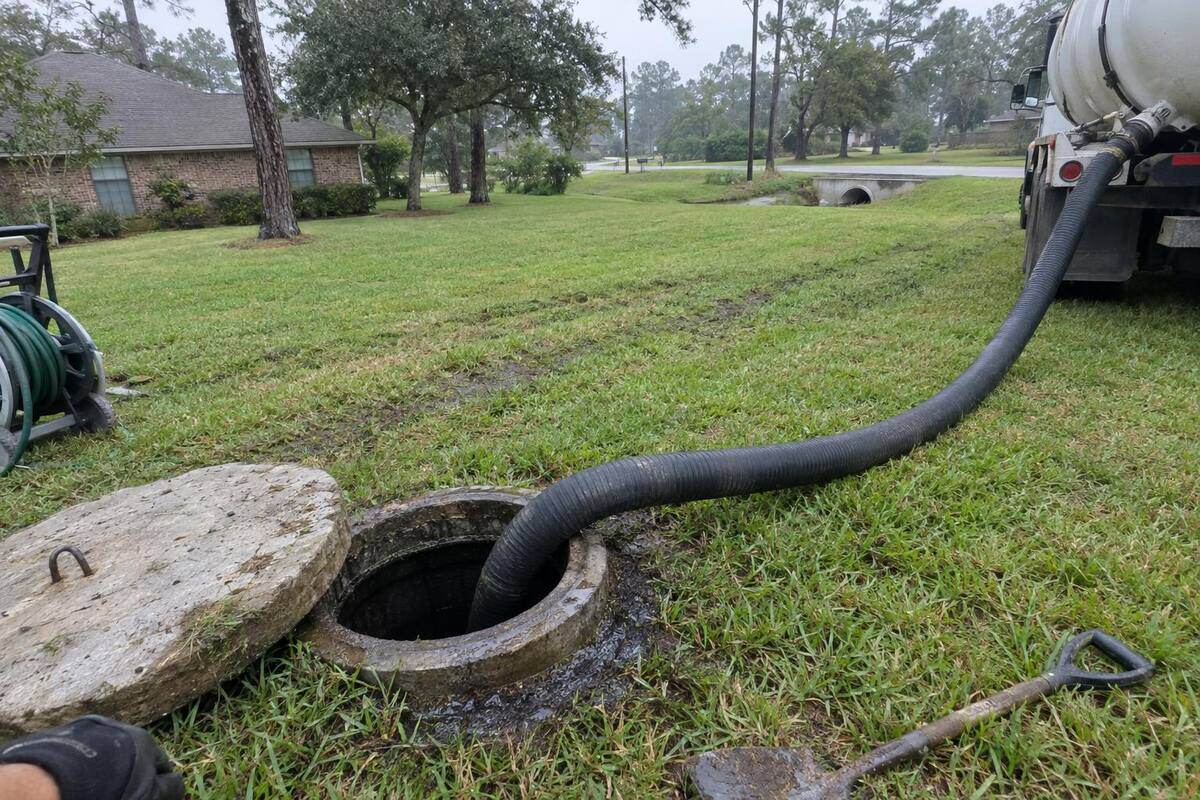
What Happens at a Pumping Visit
The pro finds the lid, which is often under a few inches of lawn, opens it, and empties the tank with a vacuum truck. The useful part is what he sees on the way: how thick the sludge and scum layers are, whether the baffles at the inlet and outlet are intact, whether the water level on the outlet side is where it should be, and whether anything is backing up from the field.
A published guide for home buyers lists the same things an inspection looks at: sludge levels, the structural condition of the tank, the drain field's performance, signs of leakage or oversaturation, and any pumps or aerators. A tank that is pumped and looked at is the cheapest inspection a septic system gets.
Source: Jennifer Yoingco, “What Houston Homebuyers Should Know Before Purchasing a Home With a Septic System,” HAR.com; the dollar figures there are national averages and the article asks readers to verify them, read November 1, 2026
How Often
The two official sources read for this site give different numbers, and both are fair. Harris County's page recommends pumping every two to three years. TCEQ's maintenance page says every three to five years for a conventional tank, and for an aerobic unit it points to sludge depth and the manufacturer's recommendation instead of a calendar.
What moves the interval is the size of the tank against the number of people in the house, whether there is a garbage disposal feeding solids in, how much water goes through, and a leaking toilet, which Harris County's page singles out as enough to overburden a system on its own.
Source: Harris County Office of the County Engineer, Wastewater FAQ (oce.harriscountytx.gov), read November 2, 2026; Texas Commission on Environmental Quality, OSSF maintenance page (tceq.texas.gov/permitting/ossf/ossfmaintenance.html), read November 2, 2026
Getting Ready
- Know where the lid is. If you do not, tell the pro roughly where the house’s main drain leaves the slab and he will probe.
- Keep the path clear of cars, boats and low fences.
- Say whether the tank has a riser to ground level. It changes how long the visit takes.
- Mention anything you have noticed: slow drains, a damp area in the yard, an alarm.
Common Questions
How often should a tank be pumped?
Harris County's page says every two to three years; TCEQ says every three to five years for a conventional tank. The pro who opens the lid can see the sludge and scum levels and tell you which end of that range your household sits at.
What does pumping cost around Crosby?
A directory listing for Crosby gives about $300 to $475, depending on tank size and how easy the lid is to reach. Distance and site conditions can move it. The cost page shows the source and the other figures in one place.
Should I use a septic additive?
Nothing on the county or TCEQ pages read for this site recommends one, and this site makes no claim about them. Ask the pro; the dependable habits on the county's page are keeping solids and chemicals out and conserving water.
Last pumped longer ago than you can say?
Call. The pro finds the lid, empties the tank and tells you what he saw.