
Septic installation
New Septic System Installation Near Lake Houston, TX
For a lot with no sewer: evaluate the soil, design the system, get the county permit, hire a registered installer, pass the inspection, then cover.
In short
- Evaluation and design by a registered professional
- County permit before building permit (Harris)
- Montgomery: 0.75 acre, or 1.5 acres with a well
- Installer registered with TCEQ, or the homeowner
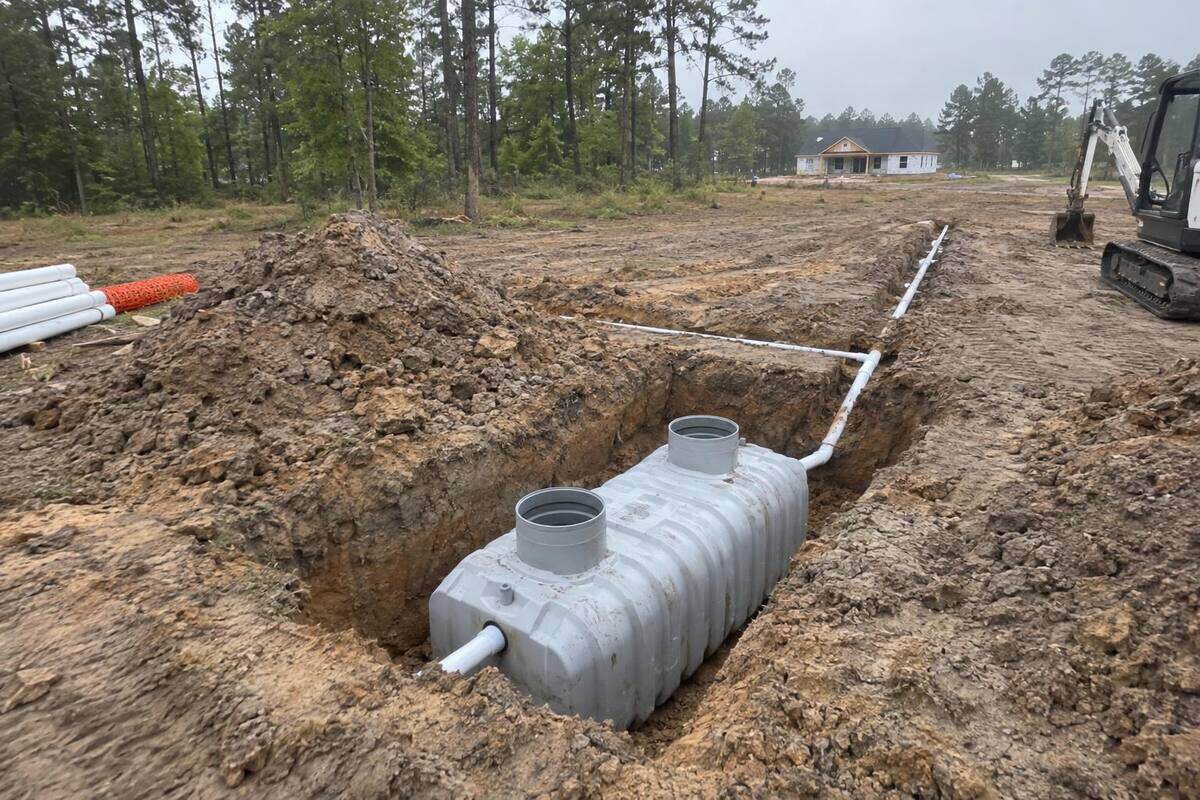
The Order Things Happen In
- Soil evaluation. A registered professional looks at the soil to see what the lot can absorb. On Gulf Coast clay that answer drives the whole design.
- Design. Drawings from a registered engineer or sanitarian (Harris) or a sealed design (Montgomery), sized to the bedrooms and the soil.
- County permit. An application, the drawings and the site evaluation. Montgomery County also asks for floor plans, floodplain status and, if the applicant is not the owner, a notarized power of attorney.
- Installation. By an installer registered with TCEQ, or by the homeowner where the county allows it.
- Inspection. Montgomery requires a Notice of Approval after installation and before backfilling; ask for the inspection by 3:00 p.m. two business days ahead. Harris asks that all inspections pass before the request for permanent power.
- Cover and operate. Only after approval. Then the system is yours to keep up.
Source: Harris County Office of the County Engineer, Wastewater FAQ (oce.harriscountytx.gov), read November 2, 2026; Montgomery County Environmental Health Services, “How to Obtain a Septic” permit guide (county document center), read November 2, 2026
What It Costs
Harris County's page gives general ranges rather than fees: $300 to $700 for the engineer or sanitarian, and $5,000 to $10,000 for installation on a single-family house. A home-buyer guide says replacement starts around $4,600 as a national average and asks readers to verify it. Montgomery County lists $295 for a new residential permit, which includes a $10 TCEQ assessment.
A lot with poor soil, a high water table or a need for an aerobic unit instead of a conventional tank can cost well beyond those figures, and only the evaluation tells you which you have.
Source: Harris County Office of the County Engineer, Wastewater FAQ (oce.harriscountytx.gov), read November 2, 2026; Montgomery County Environmental Health Services, “How to Obtain a Septic” permit guide (county document center), read November 2, 2026; Jennifer Yoingco, “What Houston Homebuyers Should Know Before Purchasing a Home With a Septic System,” HAR.com; the dollar figures there are national averages and the article asks readers to verify them, read November 1, 2026
Common Questions
Who designs the system?
Harris County says the drawings and site evaluation must come from a registered professional engineer or a registered sanitarian. Montgomery County requires a registered site evaluator to do the soil analysis and a registered sanitarian or professional engineer to produce a sealed design.
How big does my lot have to be?
Montgomery County's guide says at least 0.75 acre without a private well, or at least 1.5 acres with one, with special consideration possible for lots recorded or on the tax rolls before December 1, 1986. This site has not read Harris or Liberty County lot-size rules.
Can the building permit move before the septic permit?
Harris County's page says it cannot issue a development permit until the septic permit is issued, so applicants should start the septic permit early. Plan review takes three to five days.
Building on a lot with no sewer line?
Call. The pro starts with the soil evaluation and the county you are in.